Set It and Forget It: What Happened When a Price Bot Hunted My Kånken Deal for 30 Days
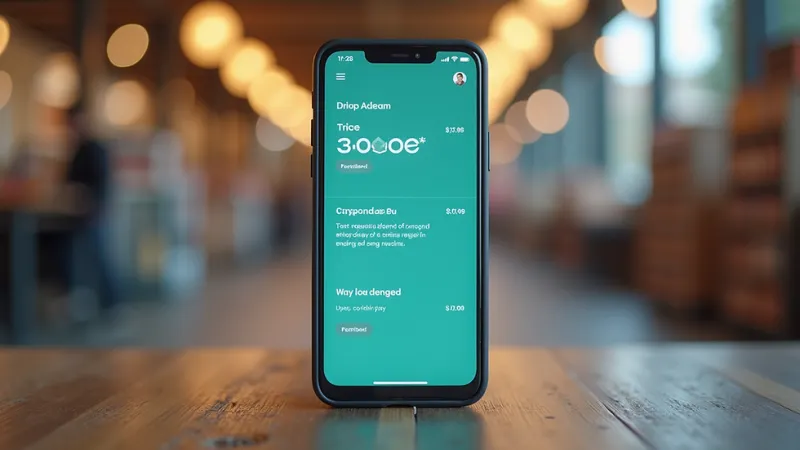
Photo: smartphone price alert notification backpack shopping, via static.wixstatic.com
I have a confession: I refresh sale pages like other people check the weather. So when the idea came up to let a robot do the deal-hunting for me — alerts instead of tabs, notifications instead of 2 a.m. REI page reloads — I signed up with genuine skepticism. Could automation actually beat a human with too much free time?
The rules were simple. For 30 days, I would not browse. I would not refresh. I would set alerts across five major US retailers that regularly stock Kånkens (REI, Backcountry, Dick's, Moosejaw, and Amazon, plus Fjällräven's own site as a control) and three third-party price trackers, then only act when something pinged my phone. Everything got logged in the same spreadsheet I use for our deal tracker here at Cheap Kanken.
Setting Up the Net
Total setup time: about 25 minutes, spread over an evening. The retailer-native alerts (the "notify me" buttons) took seconds each. The third-party trackers required a little more finesse — I had to create watch entries for the specific Kånken 20L colors I cared about, because a generic "Fjällräven Kånken" alert will fire on the 32L hiking pack variant and waste your time.
My targets: the classic 20L in any color under $75, with a dream price of $60. For context, the Kånken 20L carries a $110 MSRP at most US retailers, and based on a year of tracking, it dips to the $70–$80 range a few times annually, with Black Friday and back-to-school season being the reliable windows.
The Pings: Week One
Eleven alerts fired in the first seven days. Eleven. I had assumed I'd get maybe three.
The problem? Most were noise. Five were Amazon "price changes" that turned out to be third-party marketplace sellers listing at $105 — technically a drop from $110, practically irrelevant. Two were color-specific clearances in shades I'd flagged but wouldn't actually carry (a peachy pastel that looked great in product photos and terrible in my kitchen at 7 a.m.). One was a genuine 15%-off sitewide code at Dick's, which brought a Graphite 20L down to $93.50. Not enough.
Only three of the eleven week-one alerts were for products I'd genuinely buy. That's a 27% signal rate, and it taught me the first lesson of automated deal-hunting: an alert is only as good as how narrowly you define it.
Week Two: The False Alarm Problem
Week two got interesting. A tracker pinged me at 6:40 a.m. on a Tuesday: Kånken 20L, Fox Green, $69.99 at a retailer I won't name here. I stumbled out of bed, got to checkout, and the price had reverted to $110. The alert had caught a flash sale that lived for maybe 40 minutes — likely a pricing error or a very short promo.
This is the core tension of bot-driven shopping. Humans watching a page would have missed it too (it was 6:40 a.m.), but a human at their desk during work hours would have caught the two similar dips that followed later that week. The bots caught all three. I caught zero. Alerts are fast, but they can't complete a checkout for you.
Week Three: The Quiet
Nothing. Not one legitimate ping for seven straight days. This is where manual deal-hunters crack and start buying at full price out of impatience. The bot doesn't care. It just watches.
I used the downtime to audit my year of price data. Of the alerts I'd received so far, I checked each against the trailing 12 months of tracked prices. The verdict: only about 22% of my alerts were at or below the lowest price the item had hit in the past year. The rest were ordinary dips — real discounts, just not good ones.
Week Four: The Catch
Day 26. 11:52 a.m. Moosejaw, Kånken 20L, Super Grey, $74.93 — an automatic 20%-off promo applied at cart. I was at my desk. I checked our own tracker: that price matched the second-lowest point in the past year, beaten only by a single $69 Black Friday flash. I bought it.
Total time spent over 30 days: roughly 90 minutes, mostly reviewing alerts. Compare that to my usual method — honestly, hours of tab-hoarding — and the math is lopsided in the bot's favor.
The Verdict: Automate the Watching, Not the Buying
Here's what a month of hands-off hunting taught me, distilled for anyone who wants a Kånken without the obsession:
- Set alerts on at least three retailers plus one tracker. Single-source alerts miss cross-retailer promos.
- Filter by color and size. Half my noise was self-inflicted.
- Know your number before you start. Mine was $75. Without it, every 10%-off ping feels like a win.
- Alerts find the deals; you still have to be ready to move. The $69.99 flash died in under an hour. Keep payment info saved.
- Expect roughly one in five alerts to be an actual yearly-low. Everything else is a nudge, not a signal.
Would I do it again? Already am — I've got a watch set on the 16L for a friend's birthday in the fall. The bot found my Kånken for 32% below MSRP while I slept, worked, and generally lived my life. Turns out the best deal-hunting skill isn't patience. It's building a system that's patient for you.
Prices in this piece reflect what we tracked during the experiment window and will shift. Check our live tracker before you buy — never pay full price.